No products in the cart.
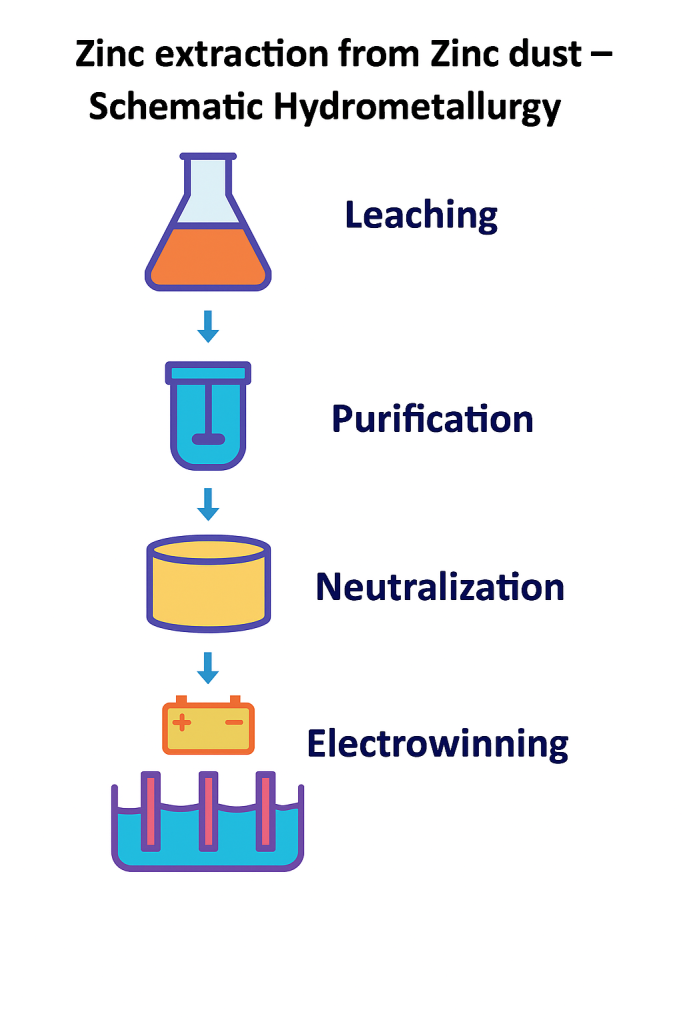
Zinc Extraction from EAF Dust
Electric Arc Furnace (EAF) dust is a hazardous by-product generated during steelmaking, typically classified as a listed hazardous waste (K061) due to the presence of heavy metals such as Zn, Pb, Cd, and Cr. Globally, millions of tons of EAF dust are produced annually, and improper disposal poses significant environmental risks.
EAF dust contains 15–40% zinc, primarily in the form of zinc oxide (ZnO) and zinc ferrite (ZnFe₂O₄). While zinc oxide is relatively easy to leach, zinc ferrite is more refractory, requiring special treatment. Recovering zinc from EAF dust not only mitigates environmental hazards but also provides a valuable secondary resource, aligning with circular economy and sustainable metallurgy principles.
Objectives
To develop a hydrometallurgical process for selective zinc recovery from EAF dust.
To optimize leaching conditions for maximum dissolution of zinc oxides while addressing the challenges posed by zinc ferrites.
To remove impurities (Fe, Pb, Cl⁻, F⁻, and other heavy metals) for production of a purified zinc sulfate solution.
To recover high-purity zinc via electrowinning.
To assess the economic and environmental viability of the proposed process.
Our competitive technologies have been ingeniously developed through rigorous lab testing to withstand extreme service conditions.
Our Approach
- Efficient zinc extraction (>85%) from EAF dust, including partial recovery from refractory zinc ferrites.
Reduction of hazardous waste and environmental footprint.
Generation of saleable zinc metal and by-products (iron-rich residues for possible reuse in construction).
Establishment of a scalable closed-loop recycling process for steel industry residues.
Engineering Consultation
Consult our engineering team for more details on this technology. Our services, providing tailored solutions from process design to optimization, ensuring efficiency, reliability, and sustainability across your operations.
Expert Team
Our team is made up of technologists, engineers, field experts, and operations managers, ensuring expertise at every level of process development.
Customer Support
We’re here for you around the clock. Our 24/7 customer support ensures you get the help you need, whenever you need it.
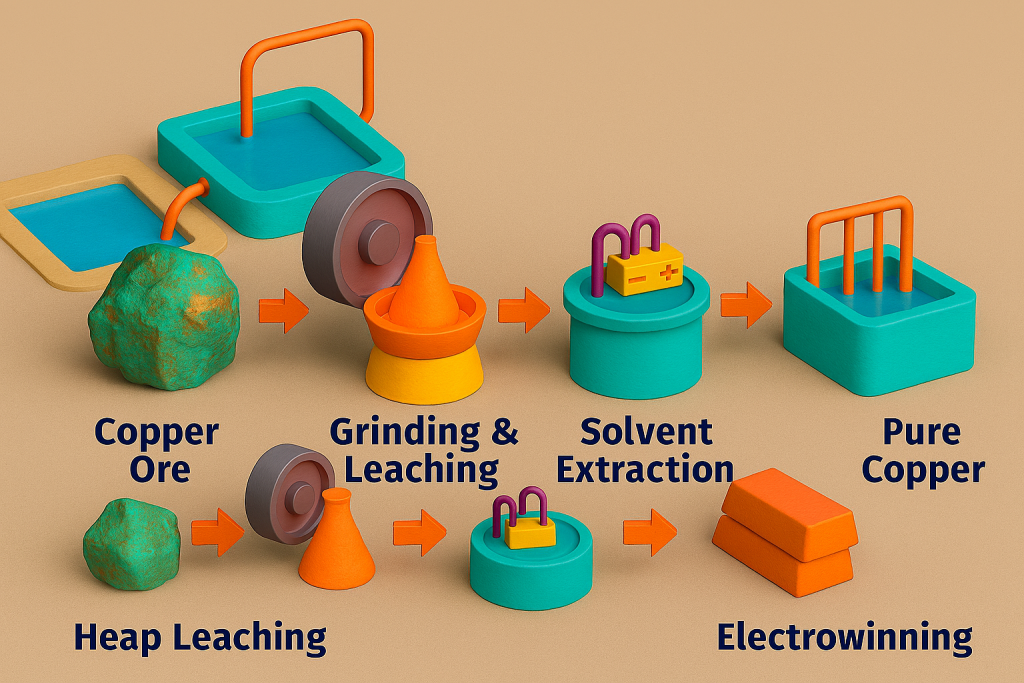
Copper Extraction from Primary and Secondary Sulphide Ores
Copper is one of the most essential industrial metals, widely used in electrical, electronic, construction, and renewable energy applications. Traditionally, copper has been extracted from sulphide ores through pyrometallurgical routes (roasting, smelting, converting). However, these processes are energy-intensive and associated with high carbon emissions.
Hydrometallurgical processing offers an alternative, especially for low-grade ores, complex sulphide ores, and secondary resources. Copper sulphide ores can be classified into:
Primary sulphides (chalcopyrite – CuFeS₂, bornite – Cu₅FeS₄) → refractory to direct leaching.
Secondary sulphides (chalcocite – Cu₂S, covellite – CuS) → more amenable to acid leaching.
Developing efficient hydrometallurgical routes for both types is essential for sustainable copper production.
Objectives
To study the hydrometallurgical extraction of copper from primary (chalcopyrite, bornite) and secondary (chalcocite, covellite) sulfide ores.
To compare different leaching strategies (acidic ferric sulfate leaching, bioleaching, pressure oxidation).
To optimize conditions for high copper recovery with minimal reagent consumption.
To produce a purified copper electrolyte solution suitable for electrowinning.
To evaluate the feasibility of integrating primary and secondary ore processing.
Our Approach
Efficient copper extraction from secondary sulfides (>90%) under ambient leaching conditions.
Improved dissolution of primary sulfides (70–85%) using pressure leaching or bioleaching.
Integration of leaching, SX, and EW into a continuous hydrometallurgical flowsheet.
Reduction in energy consumption and CO₂ emissions compared to pyrometallurgical routes.
Development of a scalable and eco-friendly process for future copper production.
Engineering Consultation
Hydrolyz offers consulting services and provides tailored solutions from mine to metal process optimization, ensuring efficiency, reliability, and sustainability across the full extraction cycle.
Expert Team
Our team is made up of technologists, engineers, field experts, and operations managers, ensuring expertise at every level of process development.
Customer Support
We’re here for you around the clock. Our 24/7 customer support ensures you get the help you need, whenever you need it.
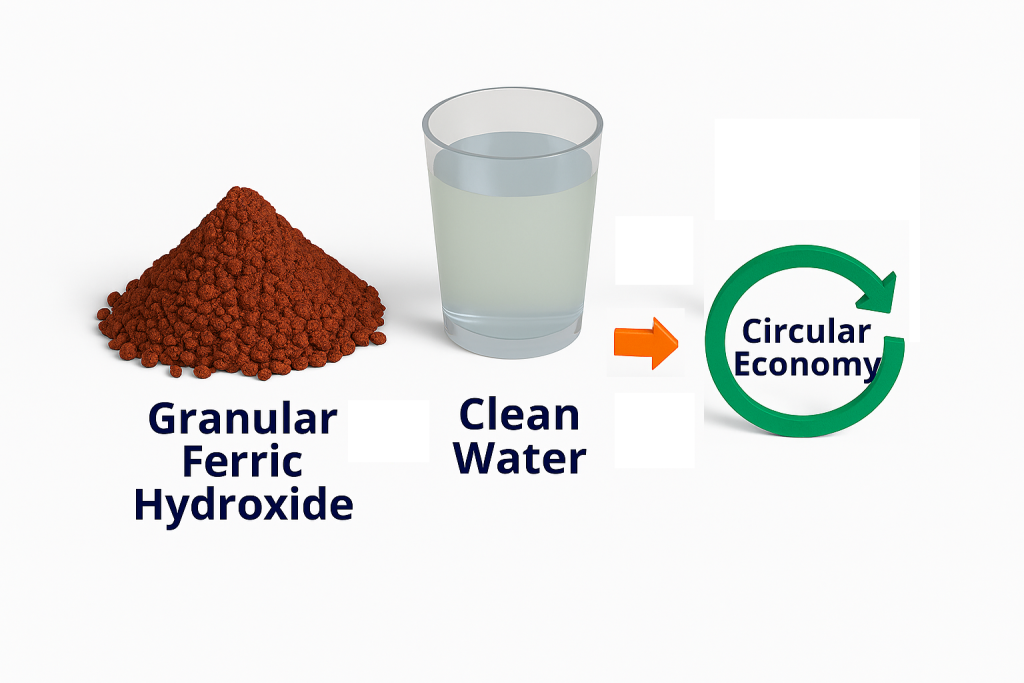
Production of Granular Ferric Hydroxide (GFH)
Access to safe and clean water is a global challenge, with millions of people exposed to harmful contaminants such as arsenic, fluoride, and heavy metals. GFH is an advanced adsorbent material designed to address this issue effectively and sustainably.
Objectives
This project focuses on the development, optimization, and application of GFH for removing toxic contaminants from drinking water and industrial effluents. With its high adsorption capacity, long operational life, and ability to target multiple pollutants (arsenic, phosphate, vanadium, chromium, and more), GFH is a critical material for achieving sustainable water treatment solutions.
By advancing GFH technology, this project aims to provide affordable, scalable, and environmentally safe water purification systems, contributing directly to global clean water goals (SDG-6) and improving public health worldwide.
Our Approach
- Advanced Materials Development: We synthesize high-performance GFH with optimized porosity, surface area, and mechanical strength, ensuring maximum adsorption efficiency.
- Technology: By transforming soft ferric hydroxide into robust, porous granules, we produce a material that works seamlessly in filter columns and treatment beds, avoiding clogging and ensuring long-term stability.
- Application: We customize GFH-based systems for municipal, industrial, and household water treatment needs, adapting to diverse water qualities and local requirements.
- Sustainability and Affordability: Our processes emphasize low energy use, safe handling, and regeneration, making GFH a cost-effective solution for communities worldwide.
- Impact-Driven Solution: We bridge research with real-world application, deploying GFH to reduce waterborne health risks, contribute to environmental protection, and advance UN Sustainable Development Goal 6: Clean Water and Sanitation.
Accurate and Reliable Results
We deliver accurate and reliable results through rigorous testing, advanced analytical methods, and industry-proven practices. Our commitment to precision ensures data you can trust for critical decision-making and process optimization.
Engineering Consultation
We also offer expert engineering consulting services, providing tailored solutions from process design to optimization, ensuring efficiency, reliability, and sustainability across your operations.
Expert Team
Our team is made up of technologists, engineers, field experts, and operations managers, ensuring expertise at every level of process development.
Customer Support
We’re here for you around the clock. Our 24/7 customer support ensures you get the help you need, whenever you need it.